
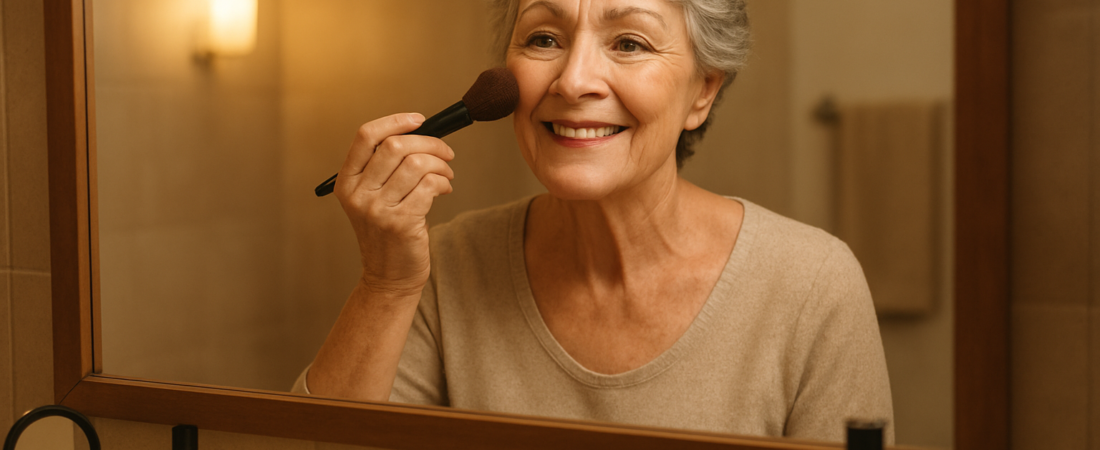
When it comes to makeup over 60, the goal is not to look younger than you are. It is to look like your brightest, most refreshed self. Mature skin can be beautiful, expressive, and radiant, but some makeup habits that worked in our 30s or 40s can start to emphasize dryness, texture, or fine lines instead of enhancing our features. The good news? A few simple changes can make a big difference.
Below are 10 common mistakes that can make mature skin look older, along with practical, flattering fixes you can start using right away. These makeup tips older women can help you create a softer, fresher look without a complicated routine.
Why Makeup Over 60 Needs a Different Approach
As skin matures, it often becomes drier, thinner, and less firm. Fine lines may be more visible, and areas like the eyelids, cheeks, and jawline can change shape over time. That does not mean you need more makeup. In many cases, you need lighter textures, better placement, and more moisture.
The best makeup for mature skin works with your skin, not against it. Think creamier formulas, less powder, and a softer hand.
10 Makeup Mistakes That Can Make Mature Skin Look Older
-
Skipping skin prep
Makeup sits on top of skin, so if skin is dry or dehydrated, foundation and concealer can cling to rough patches and settle into lines.
Why it ages the face: Dryness can make the complexion look dull and textured.
What to do instead:
- Use a gentle moisturizer before makeup.
- Give it a few minutes to absorb.
- If your skin is very dry, add a hydrating primer to smooth the surface.
Example: If your foundation looks flaky around the nose or cheeks by midday, the issue may be prep, not the foundation itself.
-
Choosing a heavy, full-coverage foundation
Many women reach for more coverage to hide redness, spots, or uneven tone. But thick foundation can settle into lines and make skin look mask-like.
Why it ages the face: Heavy formulas can flatten the face and emphasize texture.
What to do instead:
- Try a light to medium coverage foundation with a natural or satin finish.
- Apply only where you need it most.
- Use a damp sponge or soft brush for a thin, even layer.
A skin tint, serum foundation, or tinted moisturizer often works beautifully for makeup over 60.
-
Wearing the wrong foundation shade
Skin tone can change over time, and the shade you wore for years may no longer be your best match. A foundation that is too pale can wash you out. Too dark can look harsh or obvious.
Why it ages the face: A poor color match can make the skin look tired, uneven, or unnatural.
What to do instead:
- Test shades along the jawline, not on your hand.
- Check the color in natural light.
- Look for undertones that match your skin: warm, cool, or neutral.
If your neck is lighter than your face, blend foundation slightly downward for a seamless finish.
-
Using too much powder
Powder can be helpful, but too much is one of the fastest ways to make mature skin look dry and older.
Why it ages the face: Powder can settle into fine lines and remove the natural glow that makes skin look healthy.
What to do instead:
- Use powder only where needed, such as the T-zone.
- Choose a finely milled, lightweight formula.
- Apply with a small fluffy brush, not a thick puff.
If your under-eyes look crepey after setting powder, try skipping powder there altogether.
-
Applying concealer too heavily under the eyes
Under-eye circles are common, but piling on concealer usually backfires.
Why it ages the face: Thick concealer can crease and draw attention to lines.
What to do instead:
- Use a small amount of hydrating concealer.
- Apply it mainly to the inner corner and darkest area, not the entire under-eye.
- Blend gently with your fingertip or a damp sponge.
Sometimes a peach-toned corrector under a light layer of concealer works better than extra product.
-
Wearing dark or harsh eye makeup
Bold eye makeup can be lovely, but very dark liner, heavy shadow, or thick mascara can make eyes appear smaller or more tired.
Why it ages the face: Harsh lines can emphasize drooping lids or shadows around the eyes.
What to do instead:
- Choose softer shades like taupe, plum, bronze, or soft brown.
- Use pencil or shadow liner and gently smudge it.
- Focus mascara on the upper lashes to lift the eyes.
For many women, a dark brown liner gives definition without the severity of jet black.
-
Ignoring the eyebrows
Brows often become thinner, lighter, or patchier with age. If they are left undefined, the whole face can look less lifted.
Why it ages the face: Sparse brows can make features look less structured and eyes less noticeable.
What to do instead:
- Fill in gaps with a fine pencil or brow powder.
- Use short, hair-like strokes.
- Choose a shade close to your natural brow color, not too dark.
A softly shaped brow can frame the face and make a surprising difference.
-
Placing blush too low or using the wrong formula
Blush adds life, but placement matters. A stripe low on the cheeks can drag the face downward.
Why it ages the face: Low placement can emphasize sagging or flatten the cheek area.
What to do instead:
- Apply blush slightly higher on the cheeks and blend upward.
- Try cream blush for a natural, fresh finish.
- Choose flattering shades like soft rose, peach, or berry.
One of the best makeup tips older women is to use blush to restore warmth and gentle lift, not just color.
-
Using shimmery products on textured areas
A little glow can be beautiful, but too much shimmer on lids, cheeks, or around lines can highlight texture.
Why it ages the face: Frosty or glittery formulas reflect light onto wrinkles and uneven skin.
What to do instead:
- Choose satin or soft luminous finishes instead of chunky shimmer.
- Place highlighter sparingly on smooth high points of the face.
- Use matte or satin shadows on crepey eyelids.
This does not mean avoiding radiance. It means being selective about where you place it.
-
Choosing drying or overly dark lip products
Lips can become thinner and drier with age, so matte formulas and very dark shades may feel less forgiving than they once did.
Why it ages the face: Dry lipstick can crack, and deep shades can make lips look smaller.
What to do instead:
- Prep lips with balm.
- Use creamy lipstick, tinted balm, or gloss with comfortable moisture.
- Try rose, mauve, warm nude, or soft berry shades for everyday wear.
A lip liner close to your natural lip color can also help define the lip shape without looking severe.
Best Makeup for Mature Skin: Simple Upgrades That Help
If you want your routine to feel easier and more flattering, focus on formulas and tools that support mature skin.
- Cream products: Cream blush, cream shadow, and creamy concealer often blend more naturally than dry powders.
- Hydrating finishes: Satin and natural finishes usually look fresher than very matte ones.
- Good brushes and sponges: Soft tools help apply less product more evenly.
- Targeted coverage: Spot-conceal where needed instead of covering the whole face heavily.
These small upgrades can improve the look of makeup for mature skin without adding extra steps.
Quick Makeup Tips Older Women Can Use Every Day
- Use less product than you think you need.
- Blend well, especially around the jawline and eyes.
- Step back from the mirror to check the overall effect.
- Apply makeup in natural light when possible.
- Refresh your routine every few years as your skin changes.
If you wear glasses, you may want a little more blush or brow definition so your features do not disappear behind frames. If you have hooded eyes, place shadow slightly above the natural crease so it remains visible when your eyes are open.
A Fresh Approach to Makeup Over 60
The best beauty advice is often the simplest: lighter textures, softer lines, and strategic placement. You do not need to follow every trend, buy dozens of products, or aim for perfection. A flattering routine should help you feel polished, comfortable, and like yourself.
With the right techniques, makeup over 60 can brighten the complexion, define your features, and celebrate the face you have now.
Conclusion
Makeup after 60 is not about hiding age. It is about enhancing your natural beauty with products and techniques that suit mature skin today. By avoiding these 10 common mistakes, you can create a look that feels fresh, soft, and confident.
Try changing just one or two habits first. Sometimes the smallest adjustments bring the biggest results.
Key Takeaways
- Hydrated skin helps makeup look smoother and more natural.
- Heavy foundation, too much powder, and thick concealer can add years.
- Soft eye makeup, defined brows, and well-placed blush create lift.
- Creamy, lightweight formulas are often the most flattering makeup for mature skin.
- The best makeup tips older women are simple: use less, blend well, and choose softness over heaviness.