

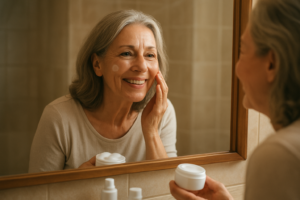
If you are looking for the best skincare over 60 routine, the good news is that it does not need to be complicated. Dermatologists generally recommend a gentle, consistent approach that focuses on hydration, sun protection, and ingredients that support mature skin without causing unnecessary irritation. As skin changes with age, the right routine can help improve comfort, softness, and overall radiance.
After 60, skin often becomes drier, thinner, and more sensitive. You may also notice more visible fine lines, uneven tone, age spots, or a loss of firmness. That is normal. Hormonal changes, years of sun exposure, and a slower natural skin renewal process all play a role. The goal of good mature skin care is not to chase perfection. It is to help your skin stay healthy, protected, and comfortable.
Below is a practical, dermatologist-inspired routine with clear steps you can actually use every day.
1. Start With a Gentle Cleanser for Skincare Over 60
One of the biggest mistakes in skincare over 60 is using a cleanser that strips away too much natural moisture. Harsh foaming washes, strong scrubs, and heavily fragranced products can leave mature skin feeling tight, dry, and irritated.
Dermatologists often recommend a gentle, non-soap cleanser or a creamy face wash. Look for words like:
- Hydrating
- Fragrance-free
- Cream cleanser
- For sensitive skin
Wash your face with lukewarm, not hot, water. In the morning, some women do well with just a splash of water or a very light cleanse. At night, cleansing is more important to remove sunscreen, makeup, and daily buildup.
Example: If your skin feels squeaky-clean after washing, your cleanser may be too harsh.
2. Use a Rich Moisturizer While Skin Is Still Slightly Damp
Hydration is the heart of effective mature skin care. As oil production declines with age, the skin barrier can weaken. That makes moisture loss more likely, especially in dry weather or air-conditioned homes.
The best moisturizer for mature skin usually contains ingredients that attract and seal in water. Helpful ingredients include:
- Hyaluronic acid to draw in moisture
- Ceramides to support the skin barrier
- Glycerin for hydration
- Squalane for softness
- Petrolatum or shea butter for extra dryness
Apply moisturizer within a minute or two after washing, when your skin is still slightly damp. This helps lock in hydration.
If your cheeks feel dry by midday, consider switching from a lotion to a cream. For very dry skin, a thin layer of an ointment-type product at night can help seal in moisture.
3. Never Skip Broad-Spectrum Sunscreen
If dermatologists agree on one anti-aging essential, it is sunscreen. Daily sun protection helps prevent more dark spots, uneven texture, and wrinkling. It also lowers the risk of skin cancer.
Choose a broad-spectrum sunscreen with:
- SPF 30 or higher
- UVA and UVB protection
- Moisturizing formula if your skin is dry
Mineral sunscreens with zinc oxide or titanium dioxide can be a good choice for sensitive skin. Some women prefer tinted formulas, which can help even out tone while avoiding a white cast.
Apply sunscreen every morning to your face, neck, chest, and hands. If you are outdoors, reapply as directed on the label, usually every two hours.
Real-life tip: Keep a tube near your toothbrush or coffee maker so it becomes part of your morning habit.
4. Add a Retinoid Slowly if Your Skin Tolerates It
Retinoids are among the most recommended ingredients for aging skin because they can help improve skin texture, fine lines, and uneven tone over time. They work by encouraging skin cell turnover and supporting collagen.
But for skincare over 60, gentle use matters. Mature skin can be more sensitive, so start slowly.
- Begin with a low-strength retinol or over-the-counter retinoid
- Use it 1 to 2 nights a week at first
- Apply a pea-sized amount for the whole face
- Follow with moisturizer
If your skin becomes red, flaky, or stings, use it less often or pause and talk with a dermatologist. Prescription retinoids may be helpful for some women, but they are not right for everyone.
Simple rule: More is not better. Consistency beats intensity.
5. Consider a Vitamin C Serum in the Morning
Vitamin C is a popular antioxidant that can help brighten the skin and support a more even-looking complexion. It may also help defend against environmental stress when used under sunscreen.
For mature skin, a gentle vitamin C serum can be useful if you have:
- Sun spots
- Dullness
- Uneven skin tone
Look for a product in opaque or dark packaging, which helps protect the ingredient from light and air. If your skin is sensitive, choose a lower strength or a formula designed for sensitive skin.
Use vitamin C in the morning after cleansing and before moisturizer and sunscreen.
6. Exfoliate Carefully, Not Aggressively
Exfoliation can help remove dull surface cells, but overdoing it is a common problem in mature skin care. Strong scrubs and frequent exfoliating acids can damage the skin barrier and increase dryness.
Instead, think gentle and occasional. Many dermatologists suggest using a mild chemical exfoliant rather than a rough scrub. Ingredients to consider include:
- Lactic acid for gentle exfoliation and hydration
- Polyhydroxy acids (PHAs) for sensitive skin
Once a week may be enough for many women over 60. If you are already using a retinoid, be especially cautious. Too many active ingredients at once can lead to irritation.
Skip exfoliation if your skin is sunburned, irritated, or unusually dry.
7. Pay Attention to the Neck, Chest, and Hands
The face often gets the most attention, but the neck, chest, and hands can show sun damage and dryness just as quickly. A well-rounded skincare over 60 routine should include these areas too.
Use your facial products on:
- Your neck
- Your upper chest
- The backs of your hands
That means cleanser, moisturizer, and especially sunscreen. If you use a retinoid or vitamin C and your skin tolerates it, you may apply a small amount to these areas as well.
Helpful habit: After applying hand cream, add sunscreen during the day if you will be driving or spending time outdoors.
8. Choose Fragrance-Free Products if Skin Is Sensitive
Sensitivity becomes more common with age. Products that once seemed fine may now cause redness, burning, or itching. Fragrance is a frequent trigger.
When shopping for the best moisturizer for mature skin or any treatment product, simpler is often better. Look for labels such as:
- Fragrance-free
- Hypoallergenic
- For sensitive skin
Also be cautious with essential oils, alcohol-heavy toners, and heavily perfumed creams. “Unscented” does not always mean fragrance-free, so read the label carefully.
If you want to try a new product, patch test it first on a small area near the jawline or inner arm for a few days.
9. Support Your Skin With Healthy Daily Habits
Good skin care does not come only from a jar. Everyday habits can make a real difference in how your skin looks and feels.
Helpful habits for mature skin
- Drink enough fluids throughout the day
- Use a humidifier in dry indoor air
- Avoid smoking, which speeds visible skin aging
- Eat a balanced diet with fruits, vegetables, healthy fats, and protein
- Get enough sleep whenever possible
- Manage stress with walks, stretching, prayer, meditation, or hobbies
These steps support overall wellness, and your skin often reflects that. While results vary from person to person, many women notice that their skin looks less dull and feels less tight when they stay hydrated and moisturize consistently.
10. See a Dermatologist for Changes That Concern You
Even the best home routine has limits. A board-certified dermatologist can help if you have persistent dryness, rosacea, eczema, severe sensitivity, or spots that are changing in color, shape, or size.
Make an appointment if you notice:
- A sore that does not heal
- A new or changing mole
- Rough, scaly patches that persist
- Sudden severe itching or rash
- Ongoing redness or irritation from products
Annual skin checks may be especially important if you have a history of sun exposure or skin cancer. For trusted health information, it is always wise to check official sources and your own medical team when needed.
A Simple Morning and Night Routine for Skincare Over 60
Morning
- Gentle cleanse
- Vitamin C serum, if using
- Moisturizer
- Broad-spectrum SPF 30+ sunscreen
Night
- Gentle cleanse
- Retinoid on scheduled nights, if tolerated
- Rich moisturizer
If your skin is very dry, you may do best with an even simpler routine: cleanse, moisturize, and protect with sunscreen. That alone can be a strong foundation.
How to Find the Best Moisturizer for Mature Skin
There is no single product that works for everyone, but the best moisturizer for mature skin is usually one you will use every day and that keeps your skin comfortable without irritation.
As you compare products, ask:
- Does it feel soothing right away?
- Does my skin still feel comfortable hours later?
- Is it fragrance-free or low-irritation?
- Does it layer well under sunscreen or makeup?
You may need a lighter cream for daytime and a richer one at night. That is common and perfectly fine.
Key Takeaways
- Skincare over 60 should focus on gentleness, hydration, and daily sun protection.
- Mature skin care works best when the routine is simple and consistent.
- The best moisturizer for mature skin often includes ceramides, hyaluronic acid, glycerin, or squalane.
- Retinoids and vitamin C can help, but they should be introduced slowly.
- See a dermatologist for persistent irritation or any changing skin spots.
Healthy skin at 60 and beyond is not about looking younger than you are. It is about feeling good in your skin, caring for it kindly, and protecting it for the years ahead. A few smart daily habits can go a long way toward keeping your skin soft, comfortable, and glowing.